


Too high-level: Neuronal plasticity – Institut Guttmann (T 1191/19)

Decision T 1191/19 Neuronal plasticity – Institut Guttmann of 1 April 2022 relates to application EP 2351523 A1 (first filing with filing date 31.10.2008).
The application related to simulating a human brain. It claimed a method of determining a treatment for a neurologic disorder, in particular as rehabilitation after a brain injury.
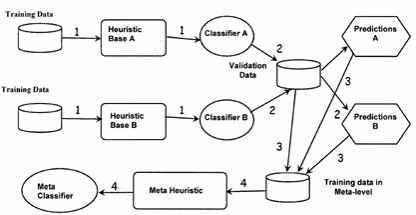
Claim 1 according to the main request in appeal proceedings reads as follows:
A computer-implemented method for optimizing predictions for personalized interventions for a determined user in processes the substrate of which is the neuronal plasticity, including one of a neurorehabilitation process, a neuroeducation/ neurolearning process and a cognitive neurostimulation process, where said interventions comprise at least cognitive and/or functional tasks to be performed by said determined user or subject of said neurorehabilitation, of said neuroeducation/ neurolearning or of said cognitive neurostimulation, wherein the method comprises:
- generating and using a database with information regarding a plurality of users at least in relation to interventions to be performed or to which to be subjected and to the users responses to the performance of said interventions,
- said method being characterized in that said information includes evolutionary variables comprising information in relation to the success of each user been subjected to one or more of such interventions, and in that the method further comprises:
- receiving, by a central computer server (5), a request for a prediction in relation to an intervention for said determined user from at least one therapist computer terminal (8) in remote communication with the central computer server (5);
- upon reception of said request, the central computer server (5) accessing said database (6), wherein if the determined user not being a user of the plurality of users, data with information regarding the determined user is introduced in the database (6);
- using, by the central computer server (5), an algorithm or strategy in the field of meta-learning for automatically performing the following steps:
- a) generating at least two groups of candidate predictions related to possible interventions to be performed or to which the determined user is to be subjected by performing at least two steps of classification learnt in a set of validation data independent and common for both steps of classification, said at least two steps of classification being carried out independently on the information of said database by means of:
a1) using two classifiers differentiated from one another at least in that each of them is based on applying a respective set of heuristic or deterministic rules different from that of the other classifier to obtain said at least two groups of candidate predictions which are different from one another, or
a2) using a single classifier based on a single set of heuristic or deterministic rules, said classifier being used at least twice, once for each step of classification with different input parameters every time, said information of the database being considered as constituent of some basic training data;
- b) generating from said validation data and said two groups of candidate predictions a set of training data in meta-level;
- c) performing a meta-classification based on at least heuristic or deterministic rules on said set of training data in meta-level, for integrating the two classifiers or for improving the performance of each of them independently,
said classification of step a) and meta-classification of step c) being carried out by means of:
- artificial neural networks, wherein said input parameters being at least related to one of the following characteristics of an artificial neural network: network topology, activation function, end condition, learning mechanism, or to a combination thereof, or
- automatic inductive learning algorithms, and
- d) based on the results of said step c), determining a final or optimum prediction by selecting one of said groups of candidate predictions obtained in step a) or by combining them to one another, and:
d1) selecting the classifier and heuristic or deterministic rules used in sub-step al) which have caused said final or optimum prediction; or
d2) selecting the input parameters of said single classifier used in sub-step a2) which have caused said final or optimum prediction,
wherein said final or optimum prediction refers to a percentage of success of applying the intervention to the determined user, said percentage being depicted by means of the evolutionary variables and incorporating new values of the evolutionary variables for the determined user in the database (6), and said success being analyzed at at least one of the following four levels:
- success at level of execution of the cognitive and/or functional task and of the suitability or adequacy of the task proposed for each specific profile of user;
- success at level of achievement of the immediate objective which is understood as an improvement in the cognitive function for which the cognitive and/or functional task has been selected;
- success at level of achievement of the generic objective which is understood as objectified improvements at other cognitive functions in addition to the target function; and
- success at level of achievement of the long term objective which is understood as a reduction of the functional limitations for the development of daily activities in the case of a neurorehabilitation process, or which is understood as the achievement of a certain degree of neurolearning in the case of a neuroeducation/ neurolearning process, or which is understood as an improvement in the stimulated cognitive capacities in the case of cognitive neurostimulation;
- supplying, by the central computer server (5) to the therapist computer terminal (8) the final or optimum prediction, in order the latter deciding whether the cognitive and/or functional tasks included in the intervention for the determined user being maintained or modified;
- sending, by the central computer server (5), to the determined user via a user computer terminal (7a, 7b, 7c) in two-way communication with said central computer server (5) the intervention decided by the therapist based on said decision; and
- receiving, by the central computer server, the results of performing said intervention from the user.
The Examining Division refused the application nonetheless as unclear or lacking inventive step. The inventive step objection was based on a lack of relationship between the allegedly solved problem and the features of the claim. The Examining Division noted that the method steps leading to the optimum predictions are so unclear and defined at such a high level that it is impossible to determine how the input data is processed in order to achieve a technical effect solving the technical problem. Put differently, the Examining Division considered the claim itself so unclear that the lack of a credibly achieved technical effect automatically leads to lack of inventive step.
The applicant appealed. The Board dismissed the appeal based both on lack of inventive step and lack of sufficiency of disclosure. Concerning sufficiency, the Board noted that the description disclosed none of:
- an example set of training data (input for the claimed meta-learning scheme),
- an example set of validation data (input for the claimed meta-learning scheme),
- the minimum number of patients from which training data should be compiled,
- heuristic bases for training the claimed classifiers A and B,
- a meta heuristic for training the claimed meta classifier
- the structure, topology, activation functions, end conditions, or learning mechanism of the claimed ANNs.
Comment
The decision by the Board of Appeal makes perfect sense because the description is almost as general as the claims. It describes the invention on the same level of abstraction, which is so high that the components of the neural network are described only functionally (using the terms “classifier”, “training data” etc. which do not describe structural features but functions). Moreover, the relationship between these components is described in no more detail.
It should be noted that defining the invention in abstract claims and describing it in abstract terms does not automatically lead to a lack of sufficiency. However, if a computer-implemented invention is described on such a high level of abstraction that it is only functionally defined, it may relate to a problem to be solved.
This decision shows that patents for AI are difficult to obtain if the application relates to an invention on too high an abstraction level. To obtain a patent, it would have been necessary to describe the invention on a lower level with more details. This has been observed generally for computer-implemented inventions, see for example Schwarz/Kruspig: Computerimplementierte Erfindungen, Carl Heymanns Verlag, 3rd ed. 2024, p. 16-17.
For the present application, a parallel US application (14/224,936) was refused as directed to non-statutory subject-matter and being obvious..
Other News