


English court skewers Iceland’s appeal and finds BABEK figurative trade mark valid
The Court of Appeal has dismissed an appeal by Iceland and upheld the validity of a UK figurative mark registered for goods and services including certain foods and drinks in Class 29 (“the BABEK mark), owned by Babek International Ltd (“Babek”).
This decision is a useful reminder that there is no need for any “pedantry” over the detail, provided that the relationship between the categorisation, visual representation and written description of a mark is consistent and identifies a single, clear and precise sign.
As shown below, the BABEK mark consists of a gold oval embossed with the word BABEK:
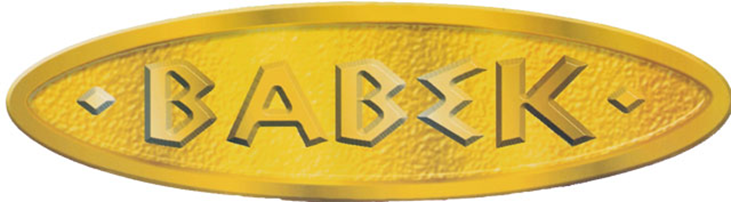
The BABEK mark was described in the registration on the file of the UK Intellectual Property Office (UKIPO) as follows: "Gold oval with embossed BABEK writing. Colour Claimed: Gold, black."
Babek claimed that Iceland had infringed the BABEK mark, and Iceland counterclaimed for a declaration that the BABEK mark was invalid.
At first instance, the judge held that the BABEK mark was valid. In arriving at his decision, the judge applied the “capacity to distinguish” test which he had previously applied in J. Sainsbury plc v Fromageries Bel SA [2019] EWHC 3454 (Ch). Under the “capacity to distinguish” test, a colour would only need to be specified if the precise hue was needed for the colour of the mark to distinguish between trade mark proprietors.
On appeal, Iceland’s main argument was that in applying the “capacity to distinguish” test, the judge had applied the wrong test to determine when colour hues must be specified, and had failed to apply the principle that, where a pictorial representation and a written description were both provided, neither had precedence over the other.
Iceland also argued that the judge erred in law as to the effect of the categorisation given to a trade mark and that the absence of Pantone numbers and the fact that there were colours in the visual representation which were not strictly either “gold” or “black” rendered the BABEK registration imprecise, and that the written description and pictorial representation were inconsistent with the so-called Sieckmann requirements, i.e. mark must be a single, clearly defined sign, and that its graphical representation (including both pictorial and written elements) must be clear, precise, self-contained, easily accessible, intelligible, durable, and objective. Iceland further argued that the judge erred in law as to the effect of the categorisation given to a trade mark.
Decision
On appeal, Lord Justice Arnold found that the judge had indeed erred in applying the “capacity to distinguish” test because it had improperly conflated the distinctive character assessment with the separate questions of (i) whether the trade mark was a sign and (ii) whether it was capable of graphical representation.
As the wrong test had been applied, the issues were reconsidered by the Court of Appeal.
However, as Arnold LJ explained, the fact that the "capacity to distinguish" test applied by the judge was “legally erroneous” did not necessarily mean that the judge reached the wrong conclusion.
Arnold LJ concluded that the BABEK mark complied with the requirements and that the mark was indeed valid. Iceland’s case that the written description of the BABEK mark was inconsistent with its pictorial representation was rejected. In the court’s view, there was no ambiguity or doubt about the subject-matter of the registration: the BABEK mark consisted of a single sign, namely that depicted in the pictorial representation.
Comment
This ruling reinforces the idea that when a trade mark registration encompasses both a pictorial element and a written explanation, they must be analysed together to establish the subject matter of protection. No single element is superior, and the key consideration is how a reasonable reader would perceive the combination.
Furthermore, when it comes to figurative marks, the requirements for clarity and precision mean that the visual depiction should clearly define the sign with enough certainty, and detailed technical references (e.g. Pantone codes) are unnecessary unless the colour itself is the focus of protection. Overly detailed or meticulous descriptions of every visual element are not required; a brief description that corresponds to the image is enough.
For a simple figurative logo, it is usually better to submit without a description to avoid any potential inconsistency or ambiguity. If a description is necessary, ensure it is concise, closely aligned with the image, and refrain from using language that implies a wider category of signs or various versions.
When a colour is claimed, it is acceptable to describe the colour using words; providing a colour code is not mandatory and is only beneficial if it aids in achieving clarity within the context; the assessment should not focus on how a pedant or nitpicker might view the registration, but instead on how a reasonable person would understand it.
It is worth noting that the BABEK mark had been filed before the requirement that, for a trade mark to be registrable, it had to be “represented graphically” was replaced with the requirement that “a trade mark must be represented in the register in a manner which enables the registrar and other competent authorities and the public to determine the clear and precise subject matter of the protection afforded to the proprietor”. The change in requirements occurred from October 2017 for EU trade marks and January 2019 for UK marks. A lot of EU and UK registrations filed before the change included descriptions similar to the BABEK mark, and this decision suggests that such older marks will not be declared invalid for lack of Pantone references or exhaustive detail, provided the written description and pictorial representation clearly refer to the same single sign.
Case reference: Babek International Ltd v Iceland Foods Ltd [2025] EWCA Civ 1341 (23 October 2025)
Our full article on this case will appear in the European Intellectual Property Review Issue 3 published in March 2026